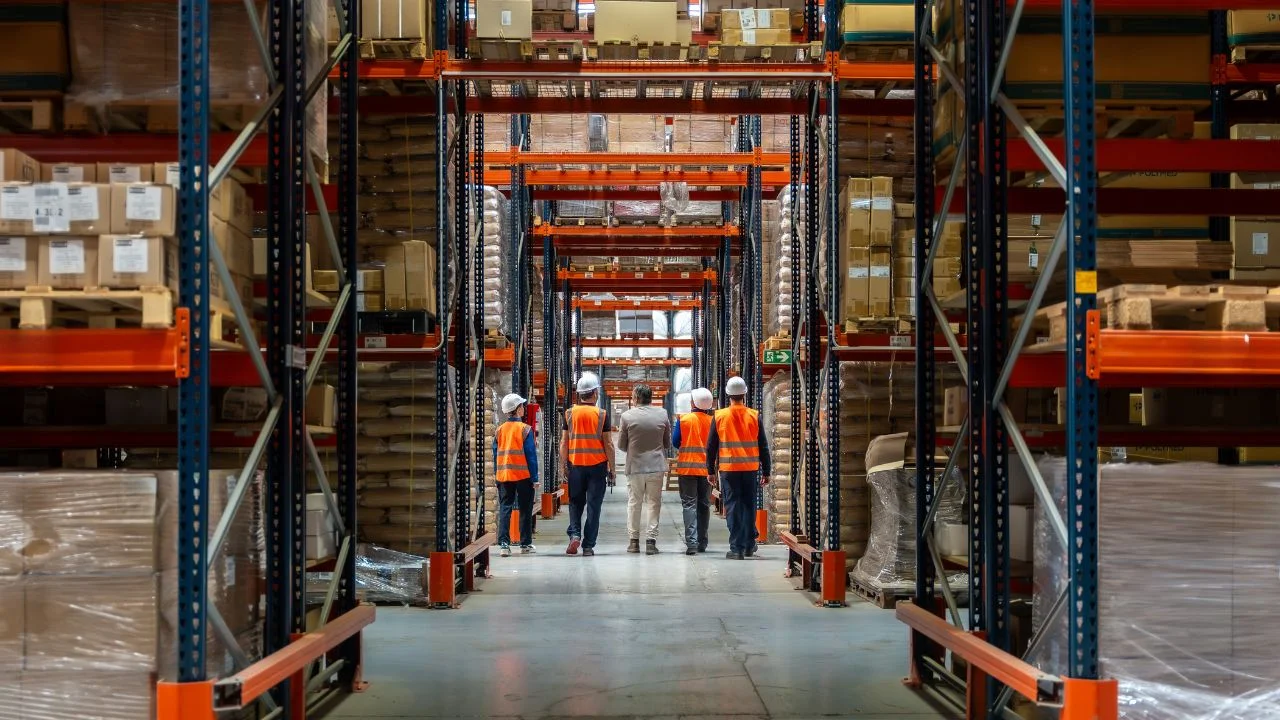
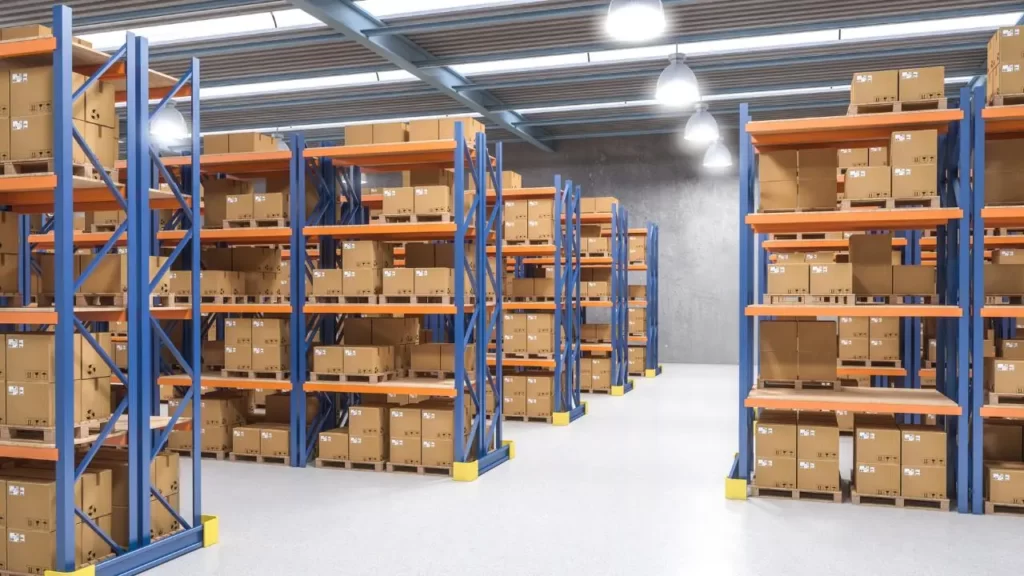
In Australia, warehouse operations optimisation is becoming essential as operating costs rise and space becomes harder to secure. Warehousing activity continues to grow, according to the Australian Bureau of Statistics (2024), putting pressure on labour, layout efficiency, and fulfilment speed. At the same time, compliance obligations under Safe Work Australia require safer traffic flow and storage systems. For many operators, improving layout, storage and workflow is now the most practical way to lift productivity and control costs.
This guide helps you understand practical ways to improve efficiency, optimise space, and strengthen overall warehouse performance.
What Is Warehouse Operations Optimisation?
Warehouse operations optimisation refers to the systematic improvement of warehouse layout, storage systems, workflows, labour allocation, and data processes to maximise output while minimising cost and risk.
It is broader than simple automation. While digitisation and robotics may play a role, optimisation typically begins with fundamentals:
- Warehouse layout optimisation
- Warehouse space utilisation
- Warehouse storage optimisation
- Workflow redesign and slotting improvements
- Process discipline and performance measurement
Safe Work Australia shows that continuous improvement in warehouse processes can deliver significant efficiency gains before major capital investment is needed.
Primary Factors and Benefits of Warehouse Efficiency Improvement in Australia
Primary Factors
Australian warehouses face distinct pressures:
- Persistent labour shortages, particularly in logistics roles (ABS Labour Force data, 2024)
- High industrial land costs in Sydney, Melbourne and Brisbane
- Safety and compliance requirements under Safe Work Australia codes
- Growth in online retail and last-mile delivery demand
Safe Work Australia guidance emphasises the legal obligation to manage traffic flow, storage risks, and manual handling hazards.
Proven Benefits
CSIRO and national productivity bodies indicate that structured warehouse efficiency improvement initiatives can deliver:
- 20–40% productivity improvements through process redesign
- Reduced picking errors and rework
- Faster order fulfilment
- Lower injury risk
According to Standards Australia, properly designed storage and workflow systems reduce both operational risk and downtime.
When applied correctly, warehouse optimisation strategies support measurable improvements in warehouse performance, not just cosmetic layout changes.
Common Warehouse Performance Challenges
Many Australian facilities experience similar barriers to warehouse performance improvement:
Poor Layout and Congestion
Inadequate aisle widths, poorly positioned dispatch zones, and cross-traffic between forklifts and pickers create bottlenecks and safety risks. Understanding warehouse layout design can help address these issues systematically.
Underused Space
Research into industrial property utilisation shows that many warehouses operate below optimal warehouse space utilisation, particularly in vertical capacity. A structured approach to warehouse space optimisation can reclaim significant usable area without expanding the facility footprint.
Inefficient Picking and Inventory Flow
Order picking accounts for a large share of warehouse labour cost. Academic studies in logistics engineering consistently identify picking inefficiencies as a primary performance constraint.
High Labour Costs
Labour remains one of the largest operating expenses in Australian warehouses, amplified by skill shortages identified by the National Skills Commission.
These issues are amplified in metropolitan areas where expansion is constrained by land availability and planning rules. Safe Work Australia’s model code of practice for managing workplace traffic confirms that poor layout directly affects safety outcomes.
How to Optimise Warehouse Operations: Step-by-Step Guide
Assess Current Performance
Start with data:
- Pick rate (lines per hour)
- Order accuracy
- Labour hours per order
- Space utilisation percentage
- Safety incidents
ABS industry benchmarks and internal KPI comparisons help establish a baseline. Reviewing your warehouse operational tools can also highlight gaps in how performance data is currently captured.
Analyse Flows and Bottlenecks
Map inbound, storage, picking, packing, and dispatch flows. Order picking can account for more than half of warehouse labour time, and even small process improvements can boost efficiency by 15–25%.
Examine:
- Cross-traffic conflicts
- Staging congestion
- SKU velocity distribution
Set Goals and Implement Quick Wins
Prioritise low-cost improvements:
- Re-slot high-velocity SKUs
- Adjust pick paths
- Remove dead stock
- Improve signage and labelling
Government-backed productivity guidance suggests that incremental improvements compound over time. This structured approach enables operators to optimise warehouse operations before investing in automation-heavy warehouse management solutions.
Warehouse Layout Optimisation Best Practices
Workflow Design and Picking Paths
Effective warehouse layout optimisation reduces travel time and improves safety. Research-backed practices include:
- U-shaped flow designs
- Clear separation of pedestrian and forklift traffic
- Dedicated staging zones
Safe Work Australia recommends eliminating crossing points where possible to reduce incident risk.
Zoning Fast and Slow Stock
ABC analysis is widely recommended in Australian logistics programs:
- A items: high-frequency, near dispatch
- B items: mid-frequency
- C items: low-frequency, higher storage levels
This directly improves warehouse efficiency outcomes. Pairing this with the right racking solutions ensures each zone performs at its intended throughput level.
Flexibility for Growth and Compliance
SafeWork NSW guidelines emphasise safe racking installation and load management. Designing adaptable layouts ensures scalability without compromising compliance.
Warehouse Space and Storage Utilisation Techniques
Vertical Maximisation and Slotting
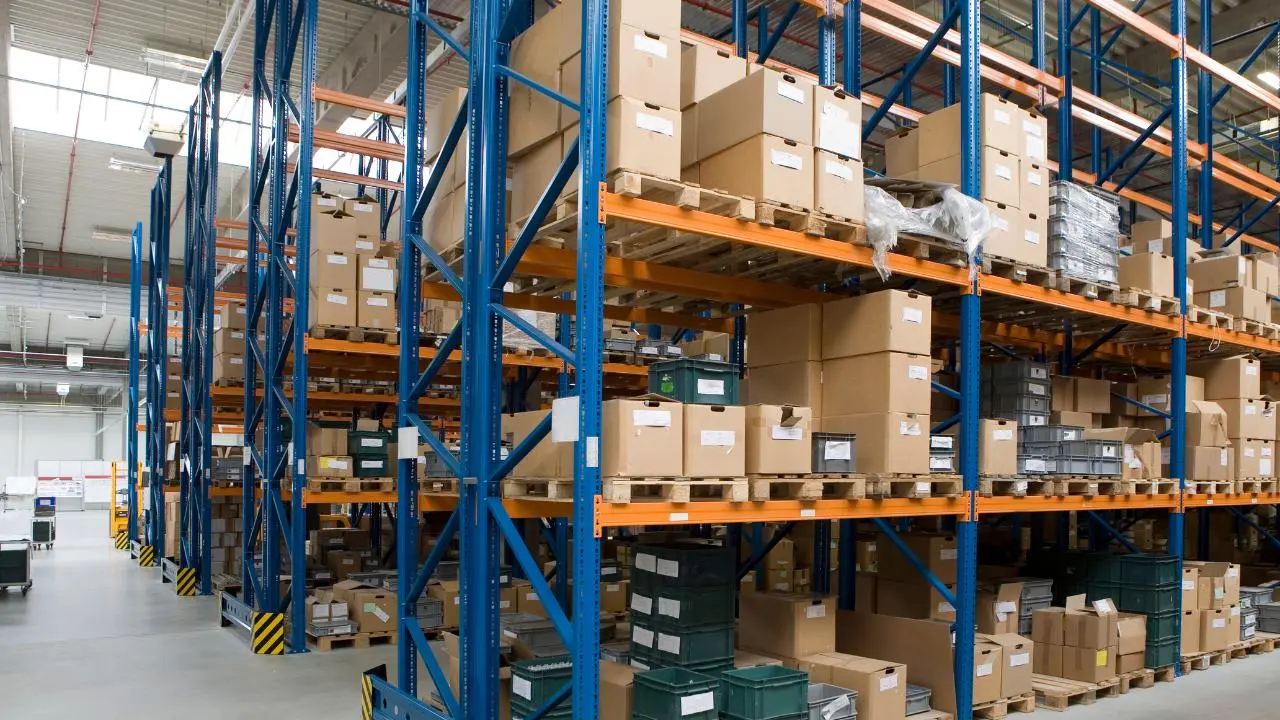
Improving warehouse space utilisation often begins with vertical expansion:
- Higher racking systems (within compliance limits)
- Mezzanine installations
- Optimised pallet configuration
Standards Australia provides detailed specifications for safe storage systems.
Reducing Dead Space
Common inefficiencies include:
- Oversized aisles
- Poor pallet stacking
- Seasonal overstock
Periodic reviews help reclaim 15–25% of usable area in many facilities.
Racking Density Trade-Offs
High-density systems improve warehouse storage optimisation, but may reduce accessibility. Operators must balance throughput requirements with storage intensity. For facilities handling heavy loads, industrial warehouse storage offers purpose-built solutions that maintain both density and access.
Australian transport and logistics studies show that overly dense layouts can increase picking time if not carefully designed.
Proven Strategies and Warehouse Management Solutions
Process First, Technology Second
Before adopting software, optimise:
- Standard operating procedures
- Task interleaving
- Labour allocation models
Warehouse Management Systems (WMS)
Modern warehouse management solutions provide:
- Real-time inventory tracking
- Directed picking
- Performance dashboards
Australian government digital capability reports suggest technology paired with process redesign delivers the strongest gains. Effective warehouse optimisation strategies integrate layout, storage, workflow, and WMS alignment for sustained warehouse performance improvement.
Reducing Costs Through Efficiency
Australian industrial sectors suggest structured warehouse efficiency improvement can reduce operating costs by 10–30 per cent, depending on baseline inefficiencies.
Cost reduction areas include:
- Lower labour hours per order
- Reduced picking errors and returns
- Improved energy efficiency through space consolidation
- Better warehouse space utilisation, reducing the need for expansion
Rather than cutting resources, effective warehouse optimisation strategies focus on eliminating waste in movement, time, and space. Over time, this leads to lower cost per unit handled and stronger competitive positioning in Australia’s high-cost operating environment.
Measuring and Maintaining Performance
Key Performance Indicators
Core KPIs for warehouse performance improvement include:
- Pick rate per hour
- Order accuracy percentage
- Inventory turnover
- Storage utilisation rate
- Safety incident frequency
ABS industry data can provide macro-level benchmarks, while internal tracking establishes facility-specific targets.
Continuous Improvement
Experts in supply chain management emphasise annual layout reviews or reassessment after major growth phases. Safe Work Australia also recommends ongoing risk reviews when processes change. Scheduling regular warehouse inspections is an important part of maintaining performance standards over time. Benchmarking against Australian productivity reports helps maintain competitive standards.
Sustainable warehouse operations optimisation requires regular performance audits, not one-off redesigns.
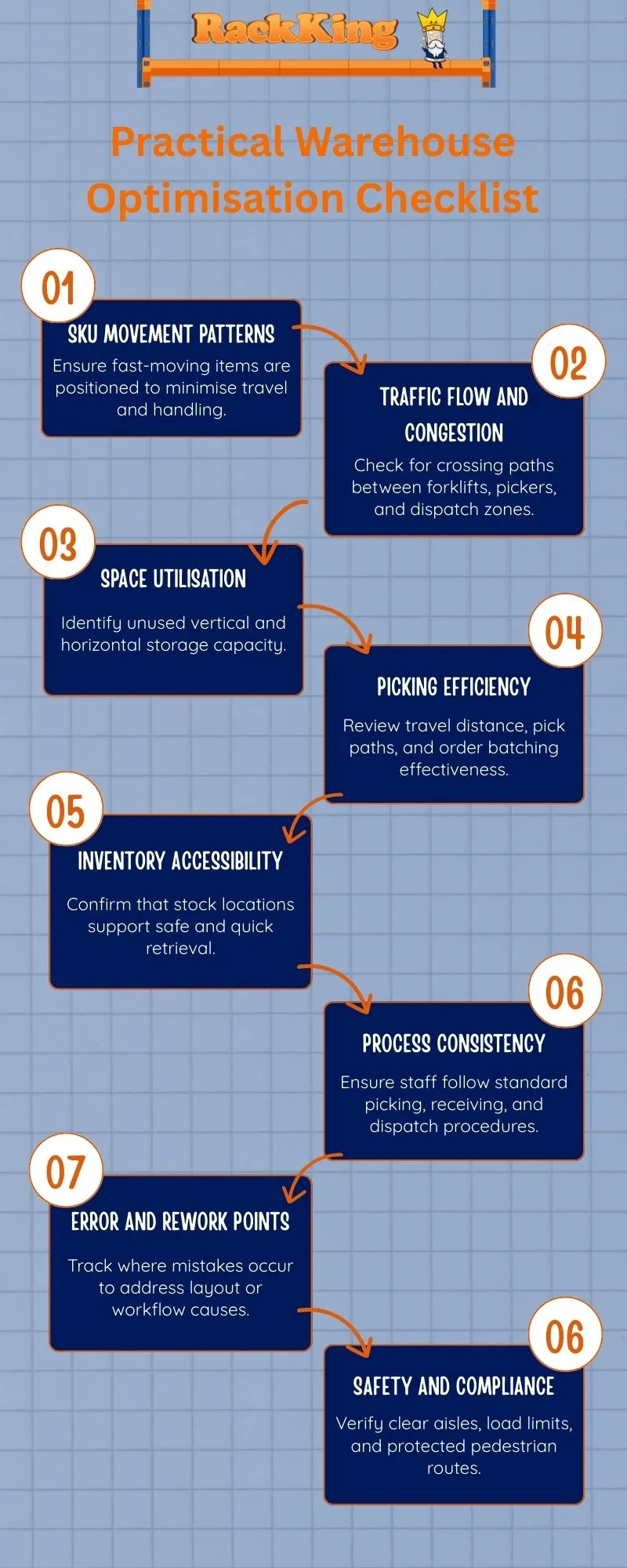
Practical Warehouse Optimisation Checklist
Choosing the Right Strategy and Limitations
Start With Your Constraints
Every warehouse is different. Before selecting any warehouse optimisation strategies, consider:
- Available floor space and ceiling height
- Labour availability and skill levels
- Compliance requirements
- Budget and growth plans
The right approach depends on your operational limits, not trends.
Prioritise Practical Gains
Many facilities achieve strong warehouse efficiency improvement through:
- Better warehouse layout optimisation
- Improved warehouse space utilisation
- Clearer processes and accountability
Large technology investments are not always the first step.
Know When to Bring in Experts
If changes involve structural racking, mezzanine floors, load ratings, or major redesign, qualified engineers and compliance professionals should be involved. Australian safety and building regulations require a formal assessment before structural alterations. Ensuring AS 4084-2023 pallet racking standards are non-negotiable steps in any significant storage redesign.
Conclusion
For Australian warehouse operators, warehouse operations optimisation is essential to manage rising costs, space constraints, and compliance requirements. Safe Work Australia and Standards Australia show that measurable gains come from improving layout, storage, workflows, and using structured warehouse management solutions. By focusing on process discipline, space utilisation, and continuous performance measurement, warehouses can achieve lasting efficiency, safety, and cost benefits.
To explore practical solutions for optimising your warehouse layout and storage systems, visit RackKing for expert guidance and different warehouse solutions.
FAQs
What is the easiest way to improve warehouse efficiency?
Start by reviewing your workflow and identifying bottlenecks. Small changes in layout, slotting, and process sequencing can deliver noticeable improvements without major investment.
How often should I review my warehouse layout?
Layouts should be reviewed at least once a year or after significant changes in inventory or demand. Regular checks ensure space and workflow remain efficient as operations grow.
Which KPIs matter most for warehouse performance?
Pick rate, order accuracy, space utilisation, and safety incidents are the core indicators. Tracking these consistently helps identify areas needing improvement.
How does poor space utilisation affect costs?
Underused storage increases operational expenses by requiring more space, labour, and handling. Efficient use of vertical and horizontal space reduces overheads.